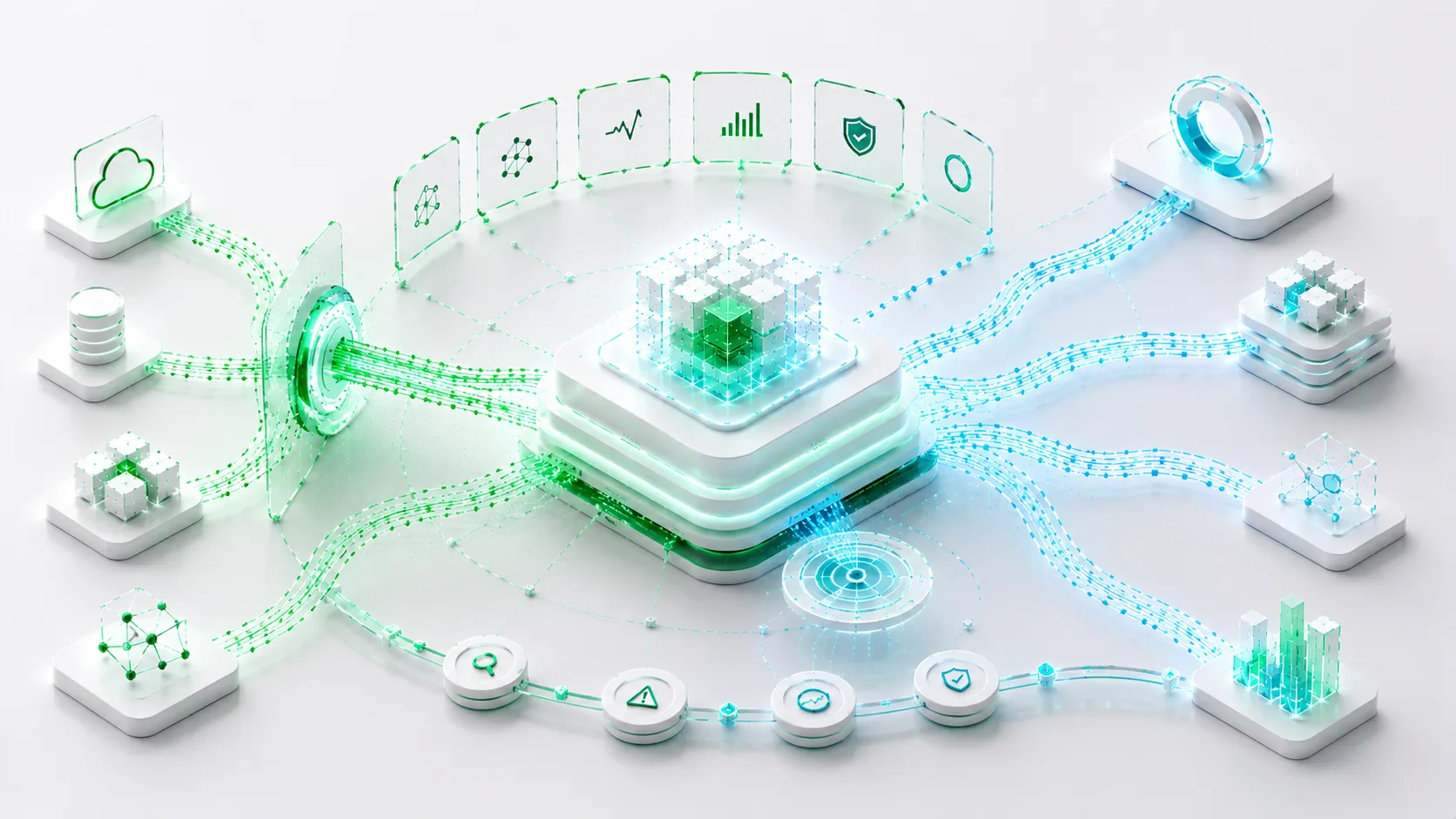
AI Observability Platforms in 2026: Building Visibility for Enterprise AI Operations
Enterprise AI systems are becoming increasingly operational, autonomous, and infrastructure-driven. Organizations are deploying AI across cloud operations, enterprise decision systems, cybersecurity workflows, developer platforms, customer operations, and large-scale orchestration environments.
As these systems gain operational authority, enterprises are discovering a critical reality: AI systems cannot scale safely without observability. In 2026, AI Observability Platforms are rapidly evolving into foundational infrastructure layers that provide visibility into AI operations, runtime behavior, infrastructure health, governance enforcement, and autonomous workflow execution.
The next generation of enterprise AI success depends less on deploying more models and more on understanding how operational AI systems behave under real-world infrastructure conditions.
What Are AI Observability Platforms?
AI Observability Platforms are enterprise systems designed to monitor, analyze, trace, validate, and govern AI operations across infrastructure environments.
These platforms provide visibility into:
- AI model behavior
- Inference operations
- Autonomous workflows
- Infrastructure telemetry
- Operational decision systems
- Prompt execution pipelines
- AI orchestration environments
- Governance enforcement
Modern AI observability extends far beyond traditional application monitoring. It now includes runtime intelligence for distributed operational AI ecosystems.
Operational Visibility
Monitor infrastructure conditions, orchestration behavior, workflow execution, and runtime AI operations continuously.
AI Governance Monitoring
Track policy enforcement, escalation workflows, operational anomalies, and autonomous decision pathways.
Infrastructure Reliability
Detect infrastructure instability, runtime drift, latency spikes, and orchestration failures before operational escalation occurs.
Why AI Observability Matters in 2026
Enterprise AI systems now influence critical operational infrastructure across:
- Cloud orchestration
- Security operations
- AI decision systems
- Autonomous workflow execution
- Infrastructure scaling
- Operational prioritization
- Customer-facing AI systems
- Developer platform operations
Without visibility into these environments, enterprises lose operational understanding of how AI systems behave under production conditions.
The Visibility Gap Problem
Traditional monitoring systems were not designed for:
- Distributed AI orchestration
- Autonomous workflows
- Prompt execution tracing
- LLM routing systems
- AI decision governance
- Cross-model coordination
- Inference telemetry analysis
The biggest operational risk in enterprise AI is not necessarily incorrect AI output. It is invisible AI behavior operating across infrastructure systems without sufficient governance visibility.
Core Components of AI Observability Platforms
1. AI Telemetry Systems
Telemetry infrastructure collects:
- Inference latency metrics
- Prompt execution traces
- Workflow orchestration signals
- Infrastructure health telemetry
- Runtime policy events
- Operational anomaly indicators
2. Decision Traceability
Modern observability platforms provide:
- Operational decision tracing
- Escalation visibility
- Workflow dependency mapping
- AI routing transparency
- Governance audit trails
3. Runtime Governance Monitoring
Observability platforms continuously validate:
- Policy enforcement
- Access governance
- Operational boundaries
- Infrastructure permissions
- Escalation compliance
- Autonomous system behavior
Distributed Runtime Visibility
Collect telemetry across AI orchestration systems, cloud infrastructure, autonomous workflows, and operational environments.
Operational Decision Intelligence
Trace autonomous decision pathways, escalation behavior, orchestration workflows, and governance enforcement systems.
AI Observability for LLMOps
LLMOps environments introduce unique observability challenges due to:
- Prompt variability
- Model routing complexity
- Inference latency volatility
- Context orchestration systems
- Agentic workflows
- Autonomous execution environments
Key LLM Observability Metrics
- Prompt success rates
- Hallucination indicators
- Model response latency
- Token consumption
- Workflow execution reliability
- Operational drift signals
- AI routing efficiency
The operational maturity of enterprise AI increasingly depends on continuous observability across these environments.
Enterprise Architecture Perspective
AI Observability Platforms should be treated as foundational operational infrastructure rather than optional monitoring tooling.
Enterprise AI architecture should include:
AI Observability Architecture Principles
- Observability-first AI operations
- Distributed telemetry pipelines
- Policy-governed runtime monitoring
- Cross-system traceability
- Infrastructure anomaly detection
- Operational escalation visibility
- Autonomous workflow auditing
- Governance-integrated observability
The most resilient enterprises integrate observability directly into AI platform engineering, governance systems, and infrastructure orchestration layers.
Challenges Enterprises Face
Infrastructure Complexity
Distributed AI environments create operational visibility fragmentation across:
- Cloud infrastructure
- Inference environments
- AI orchestration systems
- Developer platforms
- Operational workflows
- Governance layers
Operational Scale
Modern enterprise AI generates massive telemetry volumes requiring:
- Scalable telemetry pipelines
- Real-time analytics systems
- Infrastructure anomaly detection
- Operational prioritization frameworks
Governance Visibility
Enterprises increasingly require visibility into:
- Autonomous decision systems
- Policy execution
- Infrastructure access
- Operational escalation
- Runtime security behavior
Observability Insight
The future of enterprise AI governance is inseparable from observability. Organizations cannot govern AI systems they cannot operationally understand.
Implementation Checklist
Enterprise AI Observability Checklist
- Deploy centralized AI telemetry systems
- Implement distributed tracing infrastructure
- Deploy operational anomaly detection
- Implement runtime governance monitoring
- Standardize AI observability pipelines
- Monitor inference infrastructure continuously
- Implement policy enforcement visibility
- Deploy operational escalation monitoring
- Track autonomous workflow execution
- Implement cross-platform telemetry aggregation
- Continuously validate AI operational behavior
- Integrate observability into governance architecture
Common Mistakes Enterprises Make
Treating AI Monitoring Like Traditional Application Monitoring
Operational AI systems require deeper runtime intelligence and workflow visibility than conventional monitoring systems provide.
Ignoring Governance Visibility
Organizations often monitor infrastructure health while failing to observe governance enforcement and autonomous behavior.
Fragmented Telemetry Systems
Disconnected telemetry pipelines reduce operational understanding and slow incident response.
The most dangerous AI environments are not necessarily the most autonomous. They are the least observable.
Key Takeaways
Visibility Enables AI Reliability
AI systems require runtime telemetry, operational tracing, and infrastructure observability to scale safely.
Governance Depends on Observability
Enterprises cannot govern operational AI systems without visibility into runtime behavior and decision pathways.
Observability Is Becoming Core AI Infrastructure
AI observability platforms are rapidly evolving into foundational operational infrastructure layers.
How YggyTech Helps
YggyTech helps enterprises operationalize AI observability through telemetry architecture, governance-integrated monitoring systems, infrastructure visibility platforms, and operational AI reliability engineering.
Our teams support:
- AI telemetry architecture
- LLMOps observability systems
- Operational AI monitoring
- Runtime governance visibility
- AI infrastructure reliability engineering
- Distributed tracing systems
- Infrastructure anomaly detection
- Enterprise AI operational governance
Build Observable Enterprise AI Systems with YggyTech
YggyTech helps organizations deploy scalable AI observability infrastructure through telemetry systems, operational visibility platforms, governance monitoring, and AI reliability engineering.
Schedule an AI Observability ConsultationFAQs
What are AI Observability Platforms?
AI Observability Platforms monitor AI infrastructure, autonomous workflows, model behavior, governance enforcement, and operational AI systems across enterprise environments.
Why is AI observability important in 2026?
As AI systems gain operational authority, enterprises require runtime visibility into infrastructure behavior, orchestration workflows, and governance enforcement.
What metrics do AI observability platforms track?
They track telemetry, inference latency, workflow execution, prompt behavior, decision traceability, operational anomalies, and governance visibility.
How do AI observability platforms support governance?
They provide runtime visibility into autonomous systems, policy enforcement, operational escalation, and infrastructure-level AI behavior.
How does YggyTech help enterprises operationalize AI observability?
YggyTech helps organizations deploy telemetry architecture, distributed tracing systems, governance monitoring infrastructure, and operational AI visibility platforms.

Sarah Anderson
Head of Content
Sarah leads the content strategy at Yggy Tech, bringing 10+ years of experience in technology writing and editorial direction.


